
Same Day Crowns

William L. Krell, DDS, MAGD | Invisalign reg , Air Abrasion and ZOOM  Whitening

Modern, precision-crafted ceramic restorations made in one appointment — reliable, comfortable, and designed to blend seamlessly with your smile.

Same-Day Restorations That Respect Your Time and Teeth

The ability to complete a ceramic crown, inlay, or onlay in a single visit changes the way many patients experience restorative dentistry. With same-day restorations, the treatment timeline is condensed without compromising craftsmanship — you leave the office with a finished restoration rather than a temporary. That streamlined approach reduces appointments, minimizes disruption to your schedule, and eliminates the interim period when a temporary restoration may feel or function differently than your natural tooth.

Equally important is the comfort and predictability of the process. Modern chairside systems allow clinicians to plan and produce restorations with a high degree of precision, which often translates into fewer adjustments and a more comfortable fit from the start. Patients appreciate the convenience, but the real value is in preserving tooth structure and achieving a durable, esthetic result in one efficient session.

Because every step is completed under careful clinical supervision, final placement and esthetic refinements happen immediately. This immediacy helps ensure the shade, contour, and bite are evaluated and optimized right away, so your restoration looks natural and performs well from day one.
William L. Krell, DDS, MAGD | Pediatric Dentistry, ZOOM  Whitening and Snoring Appliances

Digital Scanning: A More Comfortable, Accurate Impression

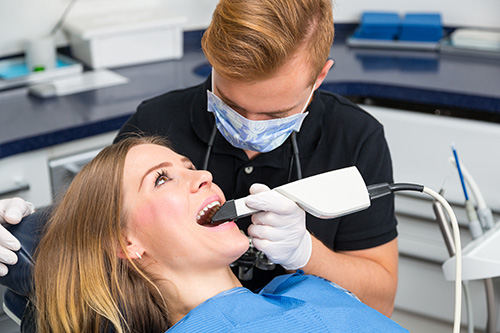
Instead of traditional putty impressions, advanced intraoral scanners capture detailed, three-dimensional images of the prepared tooth and surrounding dentition. This digital approach eliminates much of the gagging and discomfort associated with conventional impressions, while producing highly accurate data that serves as the blueprint for the restoration. The result is a better-fitting restoration and a more pleasant patient experience.

Digital scans also speed up communication and planning. Your clinician can inspect multiple angles, evaluate occlusion, and make adjustments on-screen before the restoration is fabricated. This immediate feedback loop reduces surprises and helps ensure that the final piece integrates naturally with the adjacent teeth and the way you bite and speak.

For patients who value technology and convenience, digital scanning represents a tangible improvement in care: quicker appointments, fewer remakes, and a predictable path from diagnosis to final restoration. It’s a precise foundation for producing ceramic restorations that look and feel like natural tooth structure.

William L. Krell, DDS, MAGD | Oral Exams, Snoring Appliances and CBCT

Chairside CAD/CAM: Designing and Milling with Purpose

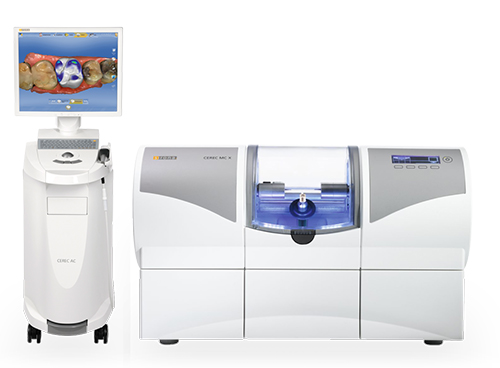
The heart of same-day ceramic work is chairside CAD/CAM technology, which stands for computer-aided design and computer-aided manufacturing. Once the digital scan is taken, specialized software is used to design a restoration that meets exacting specifications for fit, contacts, and esthetics. The design phase happens in real time at the chair, allowing the dentist to fine-tune contours and shade before production begins.

When the design is finalized, the data is sent to an on-site milling unit that carves the restoration from a high-quality ceramic block. This in-office manufacturing step puts control of the process directly in the clinician’s hands — adjustments can be made immediately, and the patient avoids delays inherent in laboratory workflows. The milled restoration is then finished, polished, and bonded into place with meticulous attention to detail.

Because the entire sequence is integrated, the final outcome benefits from fewer handoffs and greater predictability. The controlled, digital workflow helps ensure consistent marginal integrity and contact relationships, which are critical to long-term success and patient comfort.

William L. Krell, DDS, MAGD | Veneers, Oral Cancer Screening and Dental Cleanings

Materials and Longevity: Ceramic Restorations That Look Natural

Ceramics used in chairside restorations offer a match of strength and translucency that closely mimics natural enamel. Contemporary ceramic materials are engineered for durability and esthetics, providing a restoration that resists wear while delivering lifelike color and translucency. When properly designed and bonded, these restorations provide excellent function and continuity with the adjacent dentition.

Longevity depends on careful case selection, precise preparation, and skilled bonding techniques. When clinicians follow sound restorative principles and use modern adhesive protocols, ceramic crowns, inlays, and onlays can provide long-lasting service. Routine oral hygiene, protective habits, and regular dental evaluations further support the lifespan of any restoration.

For patients seeking an alternative to metal restorations or dissatisfied with the look of older work, ceramic options provide an opportunity to restore both form and function with materials that prioritize natural appearance and biocompatibility.

Why Our Practice Embraces CEREC Technology

Integrating same-day ceramic restoration technology into everyday practice reflects a commitment to efficiency, quality, and patient-centered care. By offering in-office CAD/CAM solutions, clinicians can deliver conservative restorations that respect existing tooth structure, minimize appointment burdens, and allow for immediate esthetic refinements. That combination of convenience and clinical control is particularly valuable for patients with busy schedules or those who prefer fewer visits.

Careful training and clinical experience are essential to realize the full benefits of this technology. Our practice’s emphasis on precision and evidence-based techniques helps ensure that each restoration is designed and placed with long-term performance in mind. The use of chairside systems is a clinical tool — one part of a comprehensive restorative philosophy that prioritizes dental health, comfort, and natural appearance.

Whether you need a single crown to repair a damaged tooth or a conservative onlay to replace a failing filling, same-day ceramic restorations offer a predictable, patient-friendly option. Patients typically appreciate the combination of speed, esthetics, and durability that modern chairside systems provide.

In summary, same-day ceramic restorations made with chairside digital workflows offer a powerful blend of precision, convenience, and esthetics. From digital scanning through CAD/CAM design and in-office milling, the process is crafted to deliver comfortable appointments and natural-looking results. With a foundation in careful technique and clinical experience, these restorations can be an excellent choice for many restorative needs.

If you’d like to learn more about how same-day ceramic restorations might fit into your treatment plan, please contact us for more information.

Frequently Asked Questions

What are CEREC® same-day crowns?

+

Today, there's no need to merely imagine how nice it would be to have a dental crown fabricated in a single visit. With CEREC technology and advanced systems of care, multiple trips to the dentist are a thing of the past! Now, one appointment is all it takes for our skilled and experienced dentist to design, fabricate, and place a naturally beautiful and long-lasting same-day crown. And, best of all, unlike conventional methods of care, you won't have to endure messy dental impressions, wear a temporary crown, or wait weeks for your permanent restoration to come back from the laboratory.

How are CEREC® same-day crowns made?

+

Offering a level of precision and comfort that exceeds conventional methods of care, CEREC technology is nothing short of amazing! Advanced CAD/CAM technology, which stands for computer-aided design and computer-aided manufacturing, enables our dentist to translate images from an optically scan tooth into a 3D virtual model upon which a custom crown can be digitally designed. Once this step is done, the detailed specs are then wirelessly transmitted to a chairside 3D milling machine to fabricate your new ceramic crown while you wait!

What are the benefits of CEREC® same-day crowns?

+

With conventional methods of care, a dental crown can take two to three visits to fabricate and place. However, thanks to the benefits of CEREC technology, we can prepare a tooth, then design, fabricate, and place your new crown, all while you wait.

With CEREC same-day crowns, there's none of the mess of conventional dental impressions, wearing dental temporaries, or waiting for the final crown to come back from the lab. Once the prepared tooth is optically scanned and the restoration digitally designed, your new crown can be milled from the highest quality of dental ceramics that very same visit.

Will my CEREC® same-day crown look natural?

+

CEREC same-day crowns and restorations are fabricated from the highest quality of dental ceramics. Because dental porcelain reflects light in much the same way as dental enamel, your new crown will look flawless, completely natural, and blend seamlessly with your smile.

Do CEREC® same-day crowns last a long time?

+

A CEREC same-day crown offers much more than a convenient approach to getting a dental crown. It is also a high quality, naturally beautiful, extremely durable, and long-lasting dental restoration! The fact is, with proper oral hygiene and routine dental care your new crown will serve your smile well for many years to come.

What is CEREC?

+

CEREC is a chairside CAD/CAM system that enables dentists to design, mill, and place ceramic restorations in a single appointment. It combines digital intraoral scanning, computer-aided design software, and an on-site milling unit to produce crowns, inlays, onlays, and veneers. The result is a restoration engineered for precise fit and esthetics using modern ceramic materials.

The system streamlines the restorative workflow by keeping every step under clinical supervision, from digital impression to final bonding. Because the work is completed in one visit, patients avoid temporary restorations and additional laboratory handoffs. CEREC is widely used to restore form and function while preserving as much natural tooth structure as possible.

How does the CEREC same-day restoration process work?

+

The process begins with a digital scan of the prepared tooth using an intraoral scanner, which captures a three-dimensional image of the tooth and surrounding occlusion. The image is imported into CAD software, where the restoration is designed and adjusted on-screen for contour, contacts, and shade. Once the design is finalized, the file is sent to an on-site milling unit that carves the restoration from a high-quality ceramic block.

After milling, the restoration is finished, polished, and tried in to verify fit and occlusion before permanent bonding. Final esthetic refinements and adjustments are made chairside, allowing immediate assessment of shade and bite. This integrated workflow reduces the number of visits and produces a predictable, well-fitting restoration in a single appointment.

What are the advantages of CEREC compared with traditional lab-fabricated crowns?

+

CEREC eliminates the need for temporary restorations and the multiple appointments typically required with lab-fabricated crowns, which improves convenience and reduces treatment time. Because the entire workflow is digital and performed under the dentist's control, there are fewer handoffs and opportunities for miscommunication, often resulting in more accurate marginal fit and contact relationships. Patients also appreciate the comfort of digital impressions versus traditional putty-based impressions.

Clinically, same-day restorations can preserve more healthy tooth structure when conservative onlays or inlays are appropriate, and modern ceramics offer esthetic translucency that closely mimics natural enamel. The immediate placement allows the clinician to evaluate and refine occlusion and esthetics in real time, which can decrease the need for subsequent adjustments. Overall, the predictable, streamlined nature of CEREC can enhance both the patient experience and restorative outcomes.

How do digital scans improve comfort and accuracy during CEREC treatments?

+

Digital intraoral scanners capture detailed three-dimensional images without the discomfort or gagging often associated with traditional putty impressions. These scans provide precise anatomical data that serve as the foundation for an accurately designed restoration, allowing clinicians to inspect multiple angles and evaluate occlusion on-screen. The clarity of digital files reduces the likelihood of remakes that can occur when impressions are distorted or incomplete.

Scans also speed up communication and planning because the data is available immediately for design and fabrication. Clinicians can make adjustments in real time, improving the final fit and esthetics before milling begins. For patients, the combination of comfort and precision translates to fewer surprises and a more predictable restorative experience.

What materials are used for CEREC restorations and how durable are they?

+

CEREC restorations are milled from contemporary dental ceramics engineered for a balance of strength and esthetics, including lithium disilicate and other high-strength glass ceramics. These materials provide translucency and color characteristics that mimic natural enamel while offering resistance to wear and fracture when properly designed and bonded. The choice of material depends on the location of the tooth, functional demands, and esthetic requirements.

Durability depends on case selection, preparation design, and bonding technique; when clinicians follow evidence-based protocols, ceramic restorations can provide many years of reliable service. Good oral hygiene, protective habits such as night guards if needed, and routine dental exams also support long-term performance. Ceramic restorations can be an excellent option for patients seeking biocompatible, metal-free alternatives.

Who is a good candidate for CEREC same-day restorations?

+

Good candidates include patients who need a single crown, inlay, or onlay and prefer fewer visits and immediate results; many people who previously received large or failing fillings can benefit from a conservative ceramic restoration. Patients who have difficulty with traditional impressions often appreciate the comfort of digital scanning. However, candidacy depends on clinical factors such as remaining tooth structure, bite forces, and the presence of parafunctional habits.

Complex cases that require extensive laboratory customization, implant prosthetics, or multi-unit bridges may still be better served by traditional workflows or specialized laboratory fabrication. The dentist will evaluate the tooth and overall treatment goals to determine whether a CEREC restoration is the most appropriate option. A thorough examination and discussion of alternatives ensure that the chosen approach aligns with long-term oral health objectives.

What should I expect during and immediately after my CEREC appointment?

+

Your appointment will typically begin with a digital scan after the tooth is prepared and any decay is removed; the scan replaces traditional impressions and is quick and comfortable. While the restoration is milled on-site, the dentist will finalize contours, check contacts, and prepare the tooth for bonding. Once the restoration is polished and fitted, it will be permanently bonded and the occlusion will be carefully evaluated and adjusted as needed.

After the procedure you may experience normal sensitivity for a few days as the tooth and surrounding tissues settle, and the dentist will review home care instructions to support healing and restoration longevity. Routine eating and drinking can usually resume once the numbness wears off, though avoiding extremely hard foods for a short period is prudent. Follow-up visits for regular dental exams will help monitor the restoration over time.

How should I care for a CEREC crown, inlay, or onlay?

+

Caring for a CEREC restoration is similar to caring for natural teeth: maintain a routine of twice-daily brushing with a nonabrasive fluoride toothpaste and daily interdental cleaning with floss or interdental brushes. Avoiding hard or sticky foods that could place excessive force on the restoration helps prevent chipping or dislodgement. If you have bruxism or other parafunctional habits, wearing a professionally fitted night guard can protect the restoration and surrounding teeth.

Regular dental checkups are important so the clinician can assess margins, contacts, and occlusion and address any issues early. Professional cleanings and periodic evaluations help extend the lifespan of the restoration and maintain oral health. Promptly reporting any persistent sensitivity, roughness, or changes in bite allows timely corrections to preserve function and comfort.

Can CEREC restorations be repaired if they chip or become damaged?

+

Minor chips or surface flaws can sometimes be repaired chairside using composite resin if the defect is limited and the underlying structure is sound. For more significant fractures or structural compromise, replacing the restoration is often the most predictable solution to restore proper form and function. The decision between repair and replacement depends on the extent of damage, the restoration material, and clinical judgment.

If a repair is considered, the clinician will evaluate bond strength and esthetic match to determine whether a durable result can be achieved without full replacement. In cases where replacement is recommended, the same CEREC workflow can often produce a new restoration in a single visit. Timely assessment after any damage helps protect the tooth and ensures the best long-term outcome.

How does the practice ensure quality and fit when using chairside CAD/CAM systems?

+

Quality control begins with accurate digital scanning and precise tooth preparation to establish clear margins and proper geometry for the restoration. Skilled clinicians use CAD software to refine contour and contacts and make real-time decisions before milling, and on-site milling allows immediate adjustment and verification of fit. Careful surface treatment and adhesive protocols during bonding are critical steps that affect long-term success.

Clinical experience, ongoing training, and evidence-based protocols support consistent outcomes, and the in-office workflow reduces the variables introduced by external laboratories. At the office of William L. Krell, DDS, MAGD, we combine advanced technology with four decades of clinical practice to prioritize precision and predictable results. Routine follow-up and monitoring further ensure restorations remain functional and esthetic over time.

William L. Krell, DDS, MAGD | CEREC, ZOOM  Whitening and Preventative Program

Our Services

Learn More

New Patients

Learn More

Request an Appointment

Start Today

Contact

Our Office

3100 Weslayan Street
Suite 222
Houston, TX 77027
Monday
8:30 am - 5:00 pm
Tuesday
8:30 am - 5:00 pm
Wednesday
8:30 am - 5:00 pm
Thursday
8:30 am - 5:00 pm
Friday
By Appointment
Saturday
Closed
Sunday
Closed

Get in touch with us today!