Tooth loss affects people at every stage of life and can have practical and personal consequences beyond the visible gap. Missing teeth can change how you eat, speak, and how your face appears over time. Today’s implant solutions are designed to restore not just appearance but the function and long-term health of the mouth, giving patients a dependable way to rebuild a complete smile.
At our Houston practice, we focus on clear, evidence-based treatment planning and predictable outcomes. Implant dentistry combines surgical precision with restorative craftsmanship: a properly placed implant becomes the foundation for a lifelike crown, bridge, or denture that behaves very much like a natural tooth. For many people, implants are the best option when the goal is long-term stability and comfort.
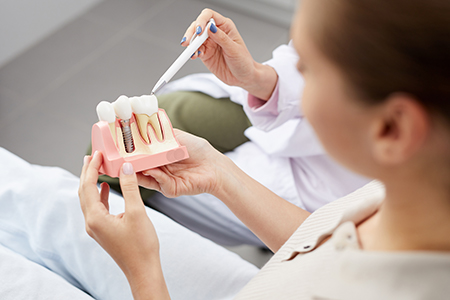
A dental implant is a small, biocompatible post surgically placed into the jaw to replace a missing tooth root. Once integrated with the surrounding bone, it provides a secure anchor for replacement teeth. Because implants restore root-level support, they preserve the bone and maintain facial contours in a way that removable options cannot.
When restored with a custom-made crown, bridge, or denture, implants allow for comfortable chewing, clear speech, and a natural appearance. These restorations are crafted to match adjacent teeth in color, shape, and proportion so that the result is both functional and esthetic without calling attention to the restoration.
For patients seeking a long-term solution, implants often outperform alternatives in stability and patient satisfaction. The combination of modern implant materials and digital planning tools helps clinicians design restorations that integrate seamlessly with a patient’s existing dentition and bite dynamics.
Implant treatment begins with a comprehensive evaluation that examines oral health, bone volume, bite relationships, and overall medical history. Imaging—often including cone-beam computed tomography—allows precise assessment of the jaw and helps guide treatment to avoid vital structures while achieving optimal implant position.
The implant procedure itself is typically performed as an outpatient surgery. In many cases, local anesthesia and discreet sedation options are available to ensure patient comfort. The surgical step places the titanium or ceramic implant into the prepared site; following that, a period of healing is required for the implant to integrate with the bone, a process called osseointegration.
After placement, the implant needs time to fuse with bone before it can reliably support a definitive restoration. Healing times vary by case: factors such as bone quality, implant location, and whether additional treatments were performed can influence the timeline. Some patients receive temporary teeth soon after surgery when appropriate.
Restorative care is just as important as the surgical phase. The final crown, bridge, or denture is designed for proper bite alignment and long-term durability. A collaborative approach between surgical and restorative steps helps ensure the implant-supported tooth integrates harmoniously with surrounding teeth and soft tissues.
Throughout treatment you should expect clear instructions for pre- and post-operative care, guidance on oral hygiene, and scheduled follow-ups to monitor healing and progress. Good communication between patient and clinician helps minimize surprises and supports predictable results.
Each type of restoration has unique advantages; the right choice depends on your oral health, the number and location of missing teeth, and personal goals for function and appearance. A careful diagnostic process helps match the treatment to your priorities.
Successful implant outcomes begin with meticulous planning. Advanced imaging and digital diagnostics let clinicians map implant positions with sub-millimeter accuracy, anticipate bone requirements, and plan restorations that will function well for years. Planning also helps identify when additional procedures—such as ridge augmentation or sinus elevation—are necessary to achieve a durable foundation.
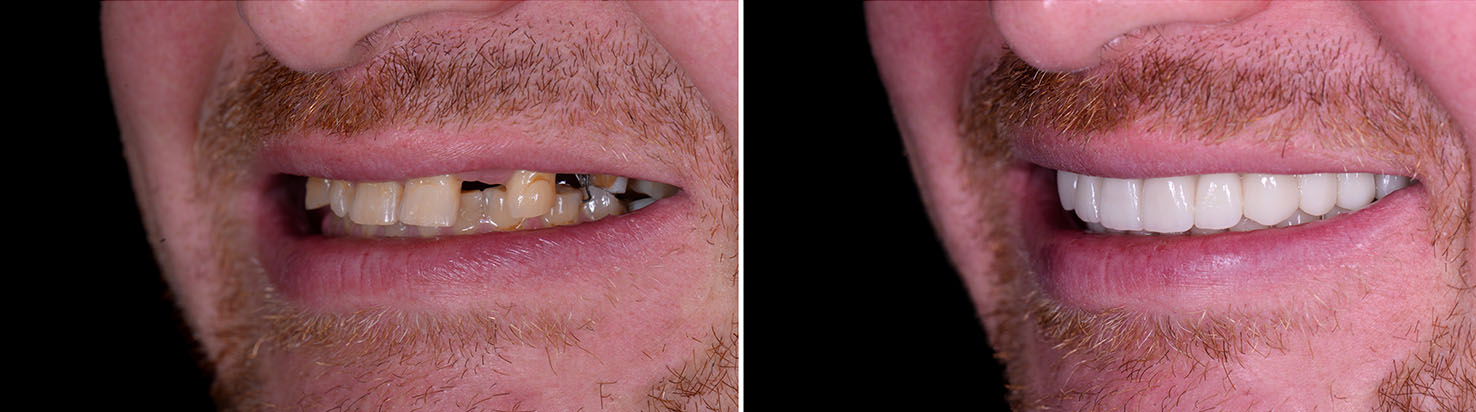
Bone loss can occur after tooth extraction or from periodontal disease, and adequate bone volume is key for long-term implant stability. Bone grafting rebuilds the ridge to create a solid base for implant placement. Grafts can be performed at the time of extraction, before implant surgery, or concurrently with implant placement when conditions permit.
Modern grafting materials and techniques are reliable and well-documented. When grafting is recommended, it is with the goal of producing a stable, long-term environment for the implant and the restoration it will support. Your clinician will explain the rationale, expected healing, and how grafting fits into the overall treatment timeline.
Comfort and safety are priorities throughout every surgical step. Options for local anesthesia and sedation are discussed in advance, and detailed aftercare instructions are provided so you know what to expect during healing.
Most people who are healthy enough for routine dental care are potential candidates for implants, though individual factors such as systemic health, bone quality, and lifestyle are considered during evaluation. A comprehensive exam determines suitability and helps identify any preparatory therapies that may be needed to support implant success.
Longevity depends on proper planning, precise placement, and diligent aftercare. Daily oral hygiene, regular dental visits, and professional maintenance help protect both the implant and surrounding tissues. Because implants integrate with bone, they require stable periodontal health and attention to risk factors like uncontrolled diabetes or heavy tobacco use.
Complications are uncommon when implants are planned and maintained correctly, but occasional issues—such as peri-implant inflammation—can arise and are generally manageable when addressed early. Prompt follow-up and routine care are the best defenses against long-term problems.
Implant dentistry blends surgical and restorative disciplines. A team with experience in both aspects can coordinate care to achieve natural-looking, stable results. From diagnostic imaging to the final restoration, each step benefits from clinical judgment, technical skill, and up-to-date protocols.
At the office of William L. Krell, DDS, MAGD, patients encounter decades of clinical experience combined with modern technology and a patient-centered approach. We prioritize individualized plans that consider your oral health, cosmetic goals, and long-term function.
Dental implants offer reliable, long-lasting solutions for replacing one or many missing teeth. They restore chewing function, support facial structure, and can be tailored to meet cosmetic and functional goals. With careful planning, modern surgical techniques, and proper maintenance, implants provide a predictable path to a confident, durable smile.
If you’d like to learn more about implant dentistry or explore whether implants are the right option for your smile, please contact us for more information. We’re happy to discuss the process and help you take the next step toward a restored, healthy smile.
If you've lost a tooth due to injury, decay, gum disease, or any other reason, we recommend dental implants to replace missing teeth. Dental implants come the closest to replicating the look, feel, and function of your natural teeth.
Dental implants are placed into the jawbone and mirror the same function as the root of a tooth. The procedure for dental implants is usually performed while a patient is sedated. Patients who undergo IV sedation must have an empty stomach and transportation home following the procedure. Most sedation patients will have little to no memory of the procedure occurring.
Generally, dental implants are made out of a biocompatible metal such as titanium. Biocompatible metals are also used for other common bone implants (such as shoulder, hip, and knee replacements). The visible portion of the implant is usually made out of porcelain and is custom-made to match your existing teeth.
Dental implants are designed to fuse to the bone, which makes them become permanent fixtures. Typically speaking, the success rate is nearly 100%. There are few cases in which the implant will not fuse as intended and must be removed. If this happens to occur, the procedure can be attempted again a few months later.
Dental implants are not usually covered by dental insurance, but may be covered under a patient's medical insurance. Our office and your insurance company can discuss coverage options with you based on your individual case and treatment plan.
It's easy... just take care of an implant as if it's a natural tooth! This involves regular brushing, flossing, and dental checkups. If you have any concerns about your implant, contact us immediately.
Dental implants are biocompatible posts that are surgically placed into the jaw to replace missing tooth roots and provide a stable foundation for replacement teeth. Once the implant integrates with the surrounding bone through osseointegration, it can securely support a crown, bridge, or denture. This root-level support restores chewing function, helps maintain facial contours, and prevents the bone loss that often follows tooth loss.
Implant restorations are custom-crafted to match adjacent teeth in color, shape, and proportion so they blend naturally with your smile. Because the implant replaces the root as well as the visible tooth, implants often feel and function more like natural teeth than removable options. Modern materials and digital planning tools improve predictability and long-term performance.
Most adults who are healthy enough for routine dental care can be considered for implants, but candidacy depends on individual factors such as bone volume, periodontal health, and overall medical status. Conditions like uncontrolled diabetes or heavy tobacco use can affect healing and may require additional management before proceeding. A comprehensive evaluation including medical history, clinical exam, and imaging is used to determine suitability.
Patients with inadequate bone in the implant site can often be treated successfully with bone grafting or ridge augmentation to create a stable foundation. Age alone is not a limiting factor; what matters is tissue health and the ability to maintain hygiene. The treatment plan is tailored to your needs and goals to achieve predictable results.
Treatment begins with a detailed consultation and diagnostic workup that often includes cone-beam computed tomography (CBCT) to evaluate bone anatomy and plan precise implant placement. From that information a coordinated surgical and restorative plan is developed to address your functional and esthetic goals. Clear instructions about preparation, anesthesia options, and what to expect help you move through each phase with confidence.
The surgical placement is typically performed on an outpatient basis using local anesthesia with sedation options available for added comfort when appropriate. After implant placement there is a healing period while the implant integrates with bone, followed by restorative appointments to create and place the final crown, bridge, or denture. Throughout treatment the team schedules follow-ups to monitor healing and adjust the plan as needed.
Healing times vary by case, but many patients require several months between implant placement and delivery of the definitive restoration to allow for dependable osseointegration. Factors that influence the timeline include bone quality, implant location, whether bone grafting or sinus elevation was performed, and individual healing capacity. In select situations temporary teeth can be provided during the healing phase to preserve esthetics and function.
Your restorative dentist will only proceed to the final crown, bridge, or denture once the implant and surrounding tissues are stable and the bite is properly aligned. The restorative phase focuses on long-term durability and natural appearance, using careful shade and shape matching. Regular follow-up visits after restoration ensure the implant and prosthesis continue to function well over time.
Implant-supported options range from single-tooth implants topped with a crown to implant-supported bridges, full-arch fixed prostheses, and implant-retained removable overdentures. A single implant replaces one tooth without altering adjacent teeth, while multiple implants can support bridges or a full-arch restoration for extensive tooth loss. Overdentures that attach to implants improve retention and comfort while remaining removable for cleaning when desired.
Choosing the right option depends on the number and location of missing teeth, bone availability, functional needs, and cosmetic goals. Diagnostic planning including imaging and bite analysis helps match the prosthesis to your anatomic and lifestyle priorities. Your clinician will discuss the advantages and expected outcomes of each approach so you can make an informed decision.
Adequate bone volume and density are essential for long-term implant stability, because the implant must be fully supported by healthy bone to withstand chewing forces. Bone can be lost after extraction, due to periodontal disease, or from long-standing tooth absence, which may compromise implant placement. CBCT imaging and clinical evaluation determine whether the existing ridge can support an implant or if augmentation is necessary.
Bone grafting and ridge augmentation can rebuild deficient sites and are commonly performed at the time of extraction, prior to implant placement, or concurrently with the implant when conditions allow. Modern graft materials and techniques are well-documented and aim to create a predictable foundation for the implant and restoration. Your clinician will explain the reasoning, expected healing, and how grafting fits into the overall treatment timeline.
Most patients experience little to no pain during implant surgery because local anesthesia effectively numbs the area and sedation options are available to reduce anxiety and increase comfort. After the procedure some soreness and swelling are normal for a few days, and these symptoms are managed with prescribed or over-the-counter medications and specific aftercare instructions. Adhering to post-operative guidelines, such as rest, ice, and a soft diet, helps minimize discomfort and supports healing.
The clinical team prioritizes safety and a calm experience by reviewing anesthesia choices and tailoring sedation to your needs. Clear preoperative instructions and scheduled follow-ups ensure any concerns are addressed promptly. If unexpected symptoms occur, the practice provides guidance and intervention to protect healing and outcomes.
Daily oral hygiene is the foundation of long-term implant health and includes gentle brushing with a soft-bristle brush, interdental cleaning with floss or brushes designed for implants, and attention to the gum tissues around the restoration. Good home care reduces plaque accumulation and lowers the risk of peri-implant inflammation, which can threaten long-term success. Lifestyle factors such as tobacco use should be addressed because they can impair healing and maintenance.
Regular dental visits for professional cleaning and clinical monitoring are essential to detect early signs of problems and to maintain tissue health around implants. The care team will recommend a maintenance schedule tailored to your risk profile and may use specialized instruments to clean implant surfaces safely. Prompt treatment of any inflammation or mechanical issues preserves function and esthetics over time.
While complications are uncommon when implants are planned and placed correctly, potential issues include peri-implant mucositis or peri-implantitis (inflammatory conditions), implant failure, and, rarely, nerve or sinus complications depending on implant location. Early signs such as persistent swelling, bleeding, or discomfort should prompt timely evaluation because early management improves the chance of resolving the problem. Thorough diagnostic planning and attention to risk factors reduce the likelihood of complications.
Management strategies vary by condition and may include non-surgical therapy, surgical intervention, modification of prosthetic components, or antibiotic therapy when indicated. Collaboration between surgical and restorative teams ensures that any corrective steps align with long-term function and esthetics. Regular follow-up and good oral hygiene are the most effective defenses against long-term problems.
Implant dentistry requires close coordination between surgical and restorative disciplines to achieve natural-looking, stable results, and experience improves clinical judgment at every stage from diagnostics to final restoration. Advanced imaging and digital planning tools allow clinicians to map ideal implant positions, anticipate bone needs, and design prostheses that integrate with the bite and surrounding tissues. A practiced team can streamline care, reduce surprises, and address complex cases with a predictable approach.
At the office of William L. Krell, DDS, MAGD we combine decades of clinical experience, MAGD-level training, and a state-of-the-art Houston facility to deliver individualized implant care. Our approach emphasizes clear communication, careful planning, and ongoing maintenance so patients understand each step and what to expect during healing and beyond. These elements work together to support long-term function, esthetics, and patient confidence in their restored smile.

Get in touch with us today!